
As Exeter City celebrates its 125th anniversary season, this week offers another special opportunity to recognise a remarkable football story and a friendship that stretches from Devon to Athens and the Greek island of Andros.
On Monday, September 14, Panionios G.S.S. celebrates its 136th anniversary.
The story of Panionios began in Smyrna on September 14, 1890. Few football clubs have travelled a historical journey quite like it. From its roots in Smyrna, through displacement and rebuilding in Greece, Panionios has become an important sporting institution in Nea Smyrni, Athens.
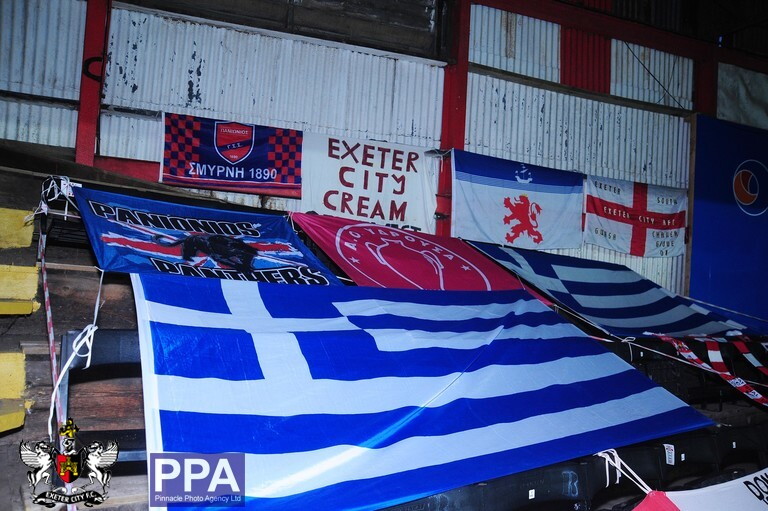
For everyone at Exeter City who has come to know Panionios and its supporters over the years, it is an anniversary worthy of recognition.There is particular significance in celebrating it during City’s own landmark season.
Exeter City traces its history back to the formation of St Sidwell’s United in 1901. The first known reference to the club came on June 3 that year, when representatives Sid Thomas and Edward Eveleigh attended a meeting to establish an Exeter Junior League.
The club played its first recorded match that September, beating Dawlish 4-2.
St Sidwell’s moved to St James Park in 1903 and, at the club’s annual meeting at the Red Lion Hotel on Sidwell Street on May 31, 1904, members voted to change its name to Exeter City Association Football Club.
One particularly important thing survived that change of name: the Grecians.
The nickname used by St Sidwell’s United remained, and 125 years later, Exeter City is still proudly known as the Grecians.
When Panionios came to St James Park
The connection between Exeter and Panionios has its own fascinating football history. In 1998, Panionios enjoyed one of the greatest moments in its history by winning the Greek Cup. That summer, the Greek side travelled to Devon.
On Tuesday, July 21, 1998, Exeter City welcomed Panionios to St James Park for a pre-season friendly. A crowd of 1,165 watched Panionios win 2-1, with Rees scoring for City and Gary Haylock and Takis Fissas finding the net for the visitors.
At the time, it was simply another pre-season fixture. Almost three decades later, however, that meeting has taken on a new significance because of everything that has developed between Exeter supporters and Greece.
The story goes much further than one match.
Exeter City has developed something unusual for an English lower-league club: a genuine community of supporters in Greece. Over the years, Greek Grecians have followed the club from home and abroad, while supporters from Greece have also joined City fans at matches in England. For a club nicknamed the Grecians, it feels particularly appropriate.
An adventure that began on Andros
One of the strongest parts of that friendship can be found on the Greek island of Andros. The story began after Exeter supporters visited Villa Rena in Batsi in 2006. From that connection came an invitation to bring a football team to the island the following year. In 2007, they accepted.
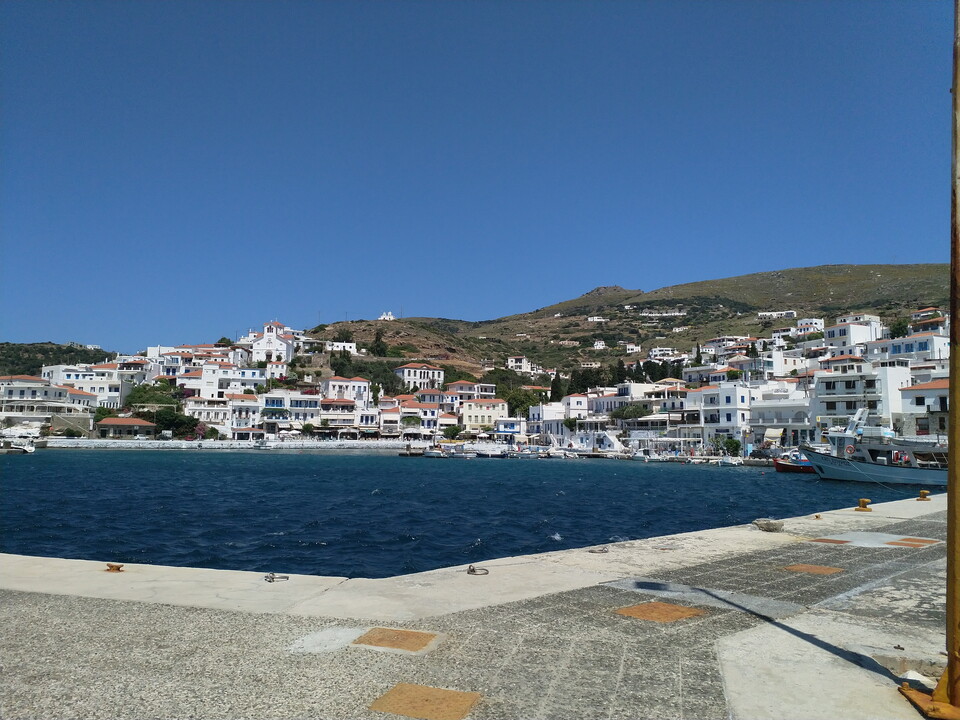
Trustee and London Exile Neil Le Milliere was among those helping to establish the Greek links. Looking back on that first adventure, Neil recalled how the group travelled to Greece “not really knowing what to expect”.
They soon found out. “The islanders welcomed us with open arms,” Neil recalled.
What might have been a one-off trip became an annual tradition. Supporters returned, friendships developed, football matches were organised and new people joined the adventure. And the Grecians kept coming back.

Football has always been central to the visits. Dinos Papachristos, who ran FC Ydrousa, helped organise matches between the visitors from Exeter and the Andros football community.
“It is always a joy when the fans of the Grecians make their way to Andros,” he said ahead of one of the annual visits.
The matches have produced winners and losers over the years. The friendships have lasted considerably longer than the results. At the centre of the Andros story has been Villa Rena in Batsi. What began with an initial meeting has developed into nearly two decades of hospitality, with Rena and the Villa Rena family welcoming generations of Exeter supporters.
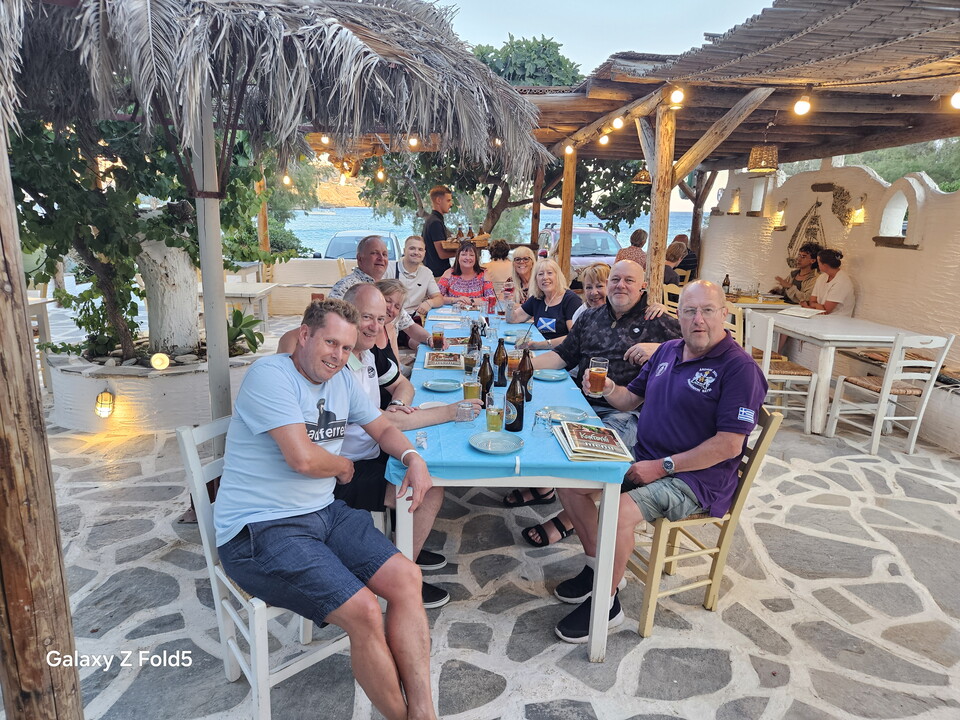
For many travelling Grecians, it has become much more than a place to stay. It is a home from home.
One friendship, two clubs
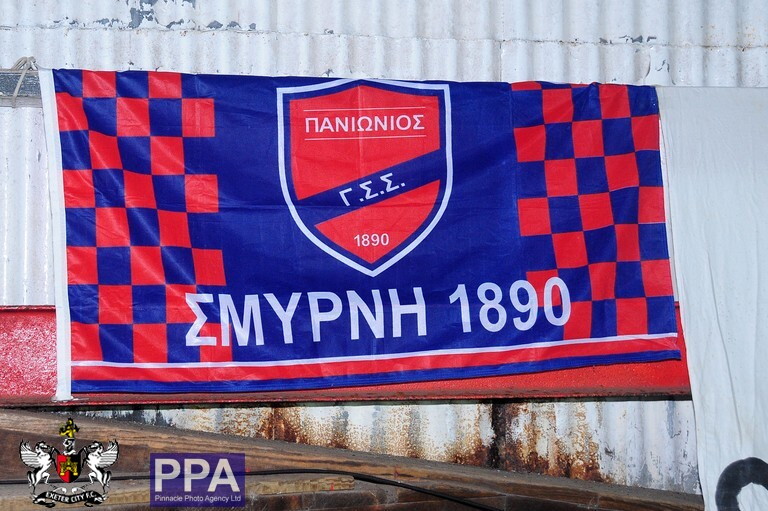
The relationship also lives through supporters such as Emmanouil Lignos, a Panionios fan who has developed a love for Exeter City. Emmanouil has helped with flag designs, strengthened connections between the two groups of supporters and welcomed travelling Grecians to Athens.
“I am proud to support Panionios and equally proud to call myself a Grecian,” he said. “Football has created genuine friendships between us, and I hope we can continue building those friendships for many years and hopefully see Panionios and Exeter City together on the same pitch again.”
Another important figure in strengthening the modern relationship has been Nikitas Vellis of Panionios. His connection with Exeter has helped conversations develop beyond football results and into what clubs mean to their communities. Nikitas has described football as his “lifelong language of community” an appropriate description of the entire Exeter-Greece story.
Two clubs with very different histories have discovered something important that they share: football clubs are about people, identity, history and community.
The next chapter?
There are more anniversaries to come. In 2027, it will be 20 years since that first Exeter supporters' football adventure to Andros, while 2028 will mark 30 years since Panionios and Exeter City met at St James Park.
There is something wonderfully appropriate about an English football club called the Grecians developing such an enduring friendship with Greece.
From St James Park to Athens. From Nea Smyrni to Andros. Through supporters, football clubs and communities, what began with a shared love of the game has become genuine friendship.
So, during Exeter City's historic 125th anniversary season, there could hardly be a better time to recognise another great football story.
From the Grecians in Exeter to our friends in Greece:
Happy 136th anniversary, Panionios G.S.S.
We respect your history. We celebrate with you.
And here’s to the next chapter of a very special football friendship.